November All Year Long

Yesterday was the big day, the beginning of NaNoWriMo, or National Novel Writing Month. If you're a writer, you've surely heard of this challenge to write a novel -or at least the first 50,000 words of one -during the month of November. Maybe you've even completed it a time or two or maybe you're participating for the first time this year. Whatever your NaNo status for 2011, you'll probably be hearing about it online for the remainder of the month. I completed NaNoWriMo in 2006 and 2007, meaning I got at least 50,000 words on paper in each of those years. I finished a "complete" novel the first time, and got more than three-quarters of the way to a clear ending on one the second time.

The benefits of NaNoWriMo were clearly evident to me both times I particiapted, but they aren't limited to the month of November. In fact, they are aspects of the writer's journey which could be called upon all year long.

1. Community: There is a huge NaNoWriMo support group - online and off - to cheer you on. Having the support of others dealing with the same situation is key to success in any big undertaking, and the NaNo organizers understand this. Having a cheering section, and also a group of people to whom you are accountable is a powerful incentive.

2. Deadline: I work best when I have a clear deadline, and you can't get much clearer than the  30 days of November. I metered out the number of works I had to write each day in order to cross the finish line, and I made sure I got them done. If I fell too far behind, I knew it was "curtains."  Steady and sure was the best method to finish the race, so I made a schedule and stuck to it. Committing to a schedule for 30 days isn't nearly as difficult as commiting to it for a lifetime, but I'm convinced you must have that kind of grit to succeed as a writer over the long term.

3. Goal: The goal was also clearly set - 50,000 words. Knowing exactly how much is expected of you seems to make it easier to stick to the task. You can track your progress and see an end in sight. Similarly, you know right away if you're falling behind, and can do whatever's necessary to catch up.

4. Freedom: NaNoWriMo participants are encouraged to "write shitty first drafts," and there's nothing more freeing than knowing it's okay to just write and worry about editing later. In fact, you're forced to "just write" because if you stop to edit too much or too often, you'll never complete the aforementioned goal on the aforementioned schedule! Ann Lamott knew it, and after finishing two NaNo's I know it too - it's okay to write things that aren't perfect. The important thing - at least initially - is that you Just Write.

If you're participating in the challenge this year, I hope you're successful. But even if you don't complete the challenge, the NaNoWriMo experience can be a positive influence on your writing practice all year long.

How about you? Are you doing NaNoWriMo this year? Have you participated in the past? What lessons have you learned that have helped you with your current writing practice?


Oh, Kim... (or What Would All the Old Armenian Ladies Say)

My mother is fond of telling the story of her first meeting with my dad's Armenian relatives. "I went to Hudson's and bought a new outfit and new shoes," she remembers. Since my mother has always been style conscious, I imagine her in her fashionable clothes, her stocking seams perfectly straight, her dark hair neatly brushed with a glow in her blue eyes and fair Scotch/Irish complexion.

"Your Dad's mother was there, of course, and all these little old Armenian ladies," my mother continues. "Every one of them had on a black skirt, a black blouse, and thick black stockings. They sat around jabbering away and I couldn't understand a word. But I could tell they were talking about me, and that it probably wasn't good!"

She switches off the remote control on the television, where we've been watching a story on Entertainment Tonight announcing that Kim Kardashian has filed for divorce from her husband, just 72 days after their lavish multi-million dollar wedding.

"I wonder what those old Armenian ladies would say about her?" my mother asks.

I don't have to wonder. I don't speak Armenian, but I know what they'd say.  "Shame on you" sounds the same in every language.

I've never watched Keeping Up With The Kardashians, mostly because I don't find reality shows that exploit family dysfunction very entertaining. But also because I'm Armenian myself, and I've always been a little ashamed of the way this family represents my nationality.  It's not that they make much of their ethnic background on the show, for which I guess I'm thankful. But their very name proclaims their heritage - the "ian" suffix (which means "son of...") is a dead giveaway.

Kim's recent huge wedding, with her three original designer gowns and her two-million dollar engagement ring is reported to have cost the family over $6 million dollars, but also to have earned them $8 million dollars in endorsements, rights, and royalties. I don't know how they divide the take on a wedding ceremony, and I don't care. I just know that's enough money overall to provide food and shelter to a lot of homeless people in this country. Or to send a bunch of teenagers to college. Or provide health care for a lot of sick babies.

And the fact that she threw the whole thing down the toilet after 72 days is enough to make me lose my religion.

Armenia is not a rich country. It's a nation that's been plagued with disaster practically since time began. My own grandfather fled the country during the Turkish genocide in the early 1900's, and he never saw his family again. Like the majority of Armenian people in the United States my ancestors came from a small village and lived off the work of their hands. The life they were able to build here in America - even a very solidly middle class life - seemed like great wealth to them.

Obviously the Kardashian family realized the American dream in a way most Armenian families did not.  The only thing I know about their background (and this fact says a lot) is that their father, Robert, was part of O.J. Simpson's defense team. But however they obtained it, I believe they have some responsibility to use their wealth and "fame" to represent their nationality in a positive light, not to become a symbol of outrageous behavior, wretched excess, and selfish gain.

Kim Kardashian is an extraordinarily beautiful young woman with an unusual fineness of feature. I admit to an occasional flash of envy when I see photos of her with her exquisite dark eyes and glossy straight hair. Not fair, I think, for one woman to be so lovely.

But beauty is as beauty does, my Grandmother often told me. Kim Kardashian's behavior is neither beautiful nor justifiable.

And it's certainly not representative of the morality or culture of the Armenian people.

All Hallow's Eve

Halloween has always been my least favorite holiday. As a child, I approached it with a stomach dropping sense of dread. It wasn't fear of the ghosts and goblins purported to be on the loose. It was the expectation to dress up in costume and go out "begging" for candy that brought me to my knees in terror. I have no idea where my aversion to costumes and trick or treating arose. It's possible that my inherent shyness was at the root of it. Wearing a costume made me feel self-conscious, and going up to someone's front door, banging on it, and yelling "Trick or Treat" (while wearing the aforementioned self-consciousness producing costume) was just too much for my sensitive little psyche.

So I dreaded the holiday every year, mostly because of the peer pressure. None of my school friends could understand my antipathy. How could I pass up an opportunity to get free candy just handed to me for no reason?

But I could and I did, year after year. As I got older, their amazement turned to scorn, and even my closest friends weren't above taunting me for staying inside with a book while they roamed the streets. My mother was hard pressed to explain it to the neighbors, who probably thought my failure to join in the Halloween parade was part of her legendary overprotectiveness. After all, what kid voluntarily stays in the house on Halloween night when the entire neighborhood is crawling with kids and free candy?

My son's attitude toward the holiday was a polar opposite. He was three years old on his first full-fledged Halloween, and dressed as a cowboy with his six-shooter holstered proudly on his side. He would have stopped at nothing to get to every house on our street and fill his little sack with candy. There was one darkened house where the owners were obviously away or not interested in feeding the neighborhood's sugar addictions. Undeterred, he marched around to the back door to see if he could rouse someone, while I stood at the curb cringing.

Over the years since my childhood - and even my son's childhood - Halloween has become an extremely popular holiday. People in our area decorate their houses with lights, huge inflatable pumpkins, and scary scenery. There are a couple of places we pass on our morning walks where I actually avert my eyes to avoid a very realistic corpse dangling from a tree.

Personally, I find these kinds of displays in poor taste. But then, I don't love Halloween.

I'm no longer afraid of the holiday, at least not like I once was. It's easy to avoid now- none of the houses on our street even give out candy. There are no sidewalks here, and the houses are far apart and set back from the road, making it more effort than its worth when there are much better places just across the main road at the end of the street. If I were to mark the day at all, it would more likely be as All Saints Day on November 1, the Christian holiday of remembrance for those who have died, especially during the past year. In fact, we did that at our church yesterday, calling special attention to the Memorial Wall where the names of several hundred departed church members have been inscribed over the past 25 years. Our minister read the "roll call" of those who have gone on to The Church Triumphant (which I think is a very fine expression.)

So tonight I'll be inside in my favorite costume - my fuzzy flannel pants and a thermal tee shirt or a pair of medical scrub sets purchased from

.

Of course there will be treats - maybe some popcorn or chips and dip, two of my favorite salty addictions. I'll curl up tight with a good book and tonight's episode of Dancing With the Stars.

No tricks. Not one.

How about you? Do you love Halloween? How do you celebrate?

Bottom Line

The media is rife with stories about "the disappearing middle class" and the "exponential rise in income of the elite." As a card carrying member of the middle class, I can tell you that it does indeed feel as if the rich are only getting richer while the poor get poorer. Bottom line?  I believe we are well on our way to a two layered economic strata in this society - the rich, and varying levels of poor. Unfortunately, I know exactly where I'm going to end up in this scenario, and it's not in a Penthouse on Park Avenue. My father in law came of age during the Great Depression, an event that cemented his inherent mistrust of government and financial institutions. As a young man, he lost his life savings in a bank failure, and he never again trusted banks with much of his hard earned cash. He was a Republican and an arch conservative, and when I first started listening to his tirades on various subjects back in the early 1970's, I thought he was a little crazy.

But although I've never far veered from my own southern Democratic roots, I must admit that the past 35 years have seen several of his prophesies come true.  "The media is going to take over public opinion," he would often say.  Now this was back in the day when all the news available came out of four TV stations and the daily newspaper. There was no Fox news network, no CNN ticker running constantly, no Nancy Grace, or Rush Limbaugh, constantly badgering us with news and expose, yammering in our ears 24/7 about what we ought to believe. With this constant barrage of biased information and opinion, where do we find honest and upright information on which to form our own views?  While we may think we're thinking independently, how much have our minds been affected subliminally by the information we're fed by these powerful media formats?

Just as often as my father in law ranted about undue media influence on public opinion, he pontificated about the globalization of commerce. "If people in this country keep buying products made in China, one of these days the Communists will own us!"  Well, perhaps the Communists don't own us, but China nearly does. Back in 1973 when my father in law stubbornly refused to buy clothes or appliances made in foreign countries, I would never have believed that the US would be in China's debt to the tune over a trillion dollars. And as we continue to outsource much of our labor and technology to China and other nations while failing to promote new business ventures and technologies here in the States, we continue to let huge chunks of our economy further out of our control.

Part of the problem is, in fact, the bottom line. Unless something is directly measurable in the profit column, it's value is discounted. Corporations have little regard for the loyalty of their workers, instead seeking ways to make more money without considering the consequences to their personnel or the larger effects on society as whole.

Bottom line? My father in law was a lot smarter than I gave him credit for. I almost wish he were still around to ask what might happen next.

Then again, I probably wouldn't want to know the answer.

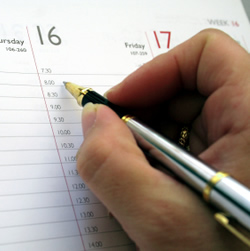
On Schedule

I’m a full-time believer in writing habits…You may be able to do without them if you have genius but most of us only have talent and this is simply something that has to be assisted all the time by physical and mental habits or it dries up and blows away…Of course you have to make your habits in this conform to what you can do. I write only about two hours every day because that’s all the energy I have, but I don’t let anything interfere with those two hours, at the same time and the same place.  ~Flannery O'Connor

Four months ago I quit my job. There were many reasons for that decision, but one of the things I hoped to do was to spend more time writing. Within weeks of making that decision to quit working, I learned that my first grandchild was on the way. This pregnancy was a long hoped for event, and one that was very important to me and to our family. Now I would be able to spend more time with him, help my son and daughter in law in this new adventure. So I felt confident that the gods had lined things up nicely for me, and were in fact smiling upon my decision.

Since it's been over 30 years since I cared for an infant, I started doing some reading about the latest thinking on the subject. During those first few months at home, new parents are advised to let the baby take the lead. Don't try putting them on a schedule, let them eat as often as they want. When they cry, pick them up and cuddle them, give them lots of attention and together time.

Indulge their every whim.

That fits quite nicely with my ideas about infant care. And it also mirrors the relationship I've had with my writing in the past four months. I've indulged my muse, let it take the lead with all this new free time. I've been writing whenever I felt like it, and if that meant three hours one day and 20 minutes the next, that's how it played out.

After three or four months, the child rearing experts advise parents to try and develop some semblance of a schedule. The baby is older now, feeling more secure about his place in the family. It won't hurt to let him cry for a few minutes after he wakes up, leave him alone in his crib while you take a quick shower or put in a load of laundry. Figure out a schedule that works for your family, and ease the baby into it.

I think that's probably good advice for my writing life as well.  "You have to make your habits in this conform to what you can do..." O'Connor writes. Because she suffered from a chronic illness, she "only had the energy" to write for two hours per day. "But I don't let anything interfere with those two hours, at the same time and the same place."

 Forming any kind of habit takes willpower. Part of that willpower involves creating a schedule - the same time and place - and sticking to it. But I also also have to be realistic.  Although I spent seven or eight hours every day at my office job,  I know I'm not ready or able to commit that kind of time to my writing - not yet anyway. I've chosen to dedicate two hours every morning to writing...not internet surfing, not blog reading/commenting, not social networking.

Writing.

Putting words on the page.

To help me be accountable, I'm putting my blogs on a similar schedule. I'm committing to posting daily, alternating between the three blogs, so there is new content somewhere every day.

Here's to forming good habits for the writing life, and for life in general.

Do you believe in writing habits? Do you have a schedule? What works best for you?